
AI & craft
Made by people. Woven by a machine.
The worlds, the drawings and the whole arc of every story are made by people. The one thing AI does is open the door and let your child in.
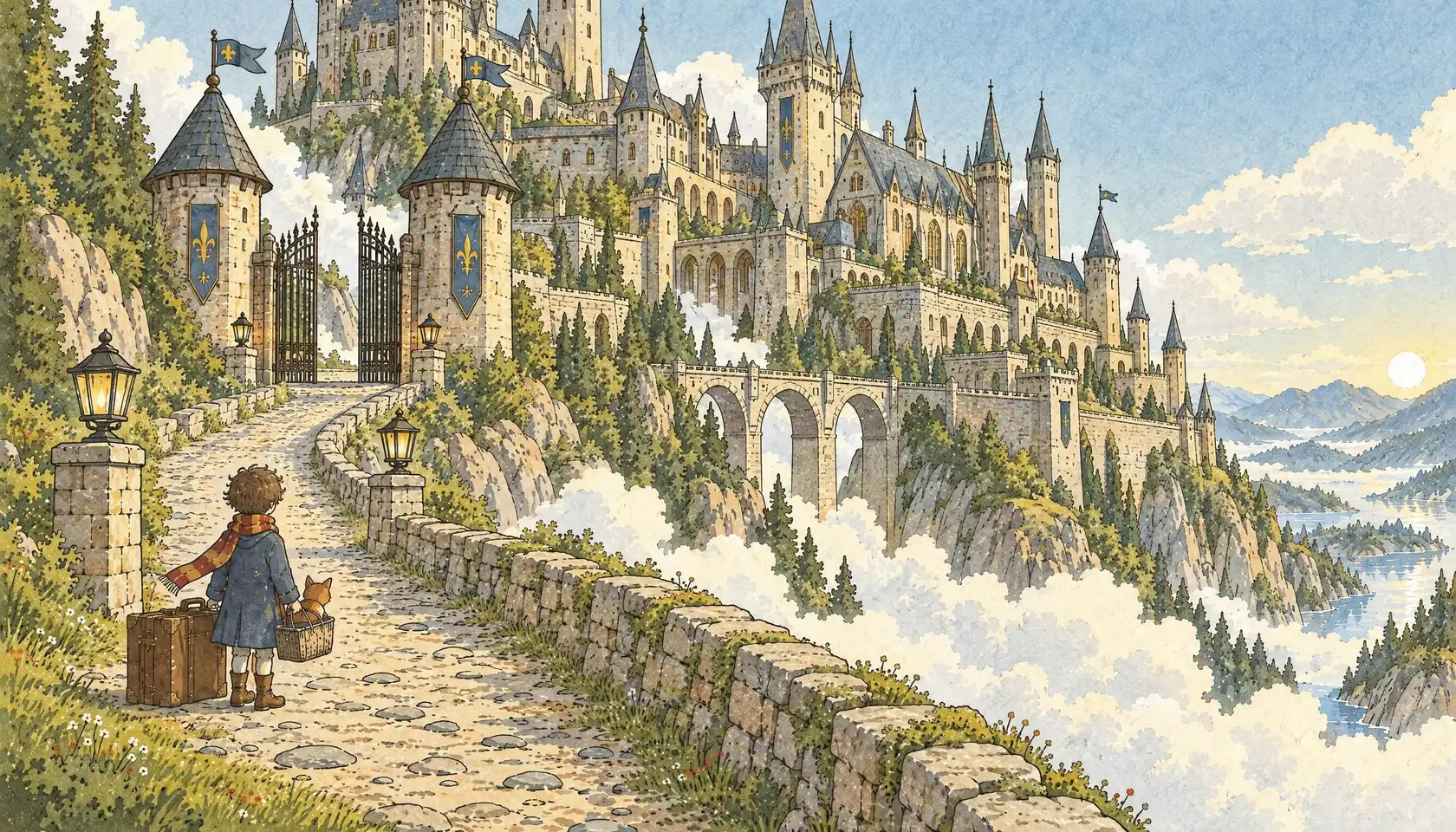
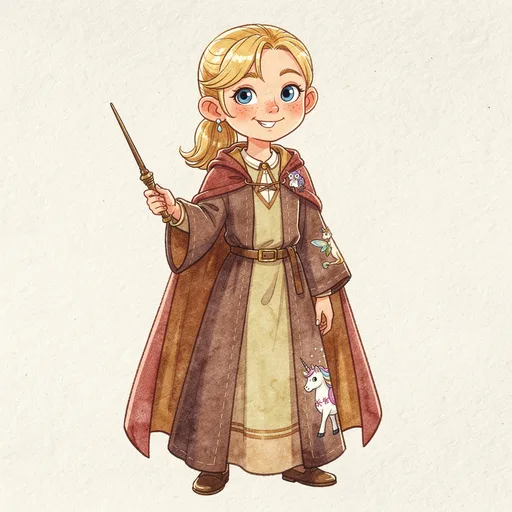
Built first. Then your child.
In plain words
We should be plain about how it is made.
The worlds are ours: real people created them, their places, their people and the whole arc of the story, long before any child is asked their name. Every place, every face and every turn of the plot is a decision a person made, thousands of them, before the first letter was ever posted. We use AI for a single job: weaving your child, your family and their friends into that story. Letters are reviewed by one of us before they are printed.
The difference
Same name. A different story.
Any app can paste a name onto a cover. A Journee letter is written around your child, inside a world people built, and it comes through the door.

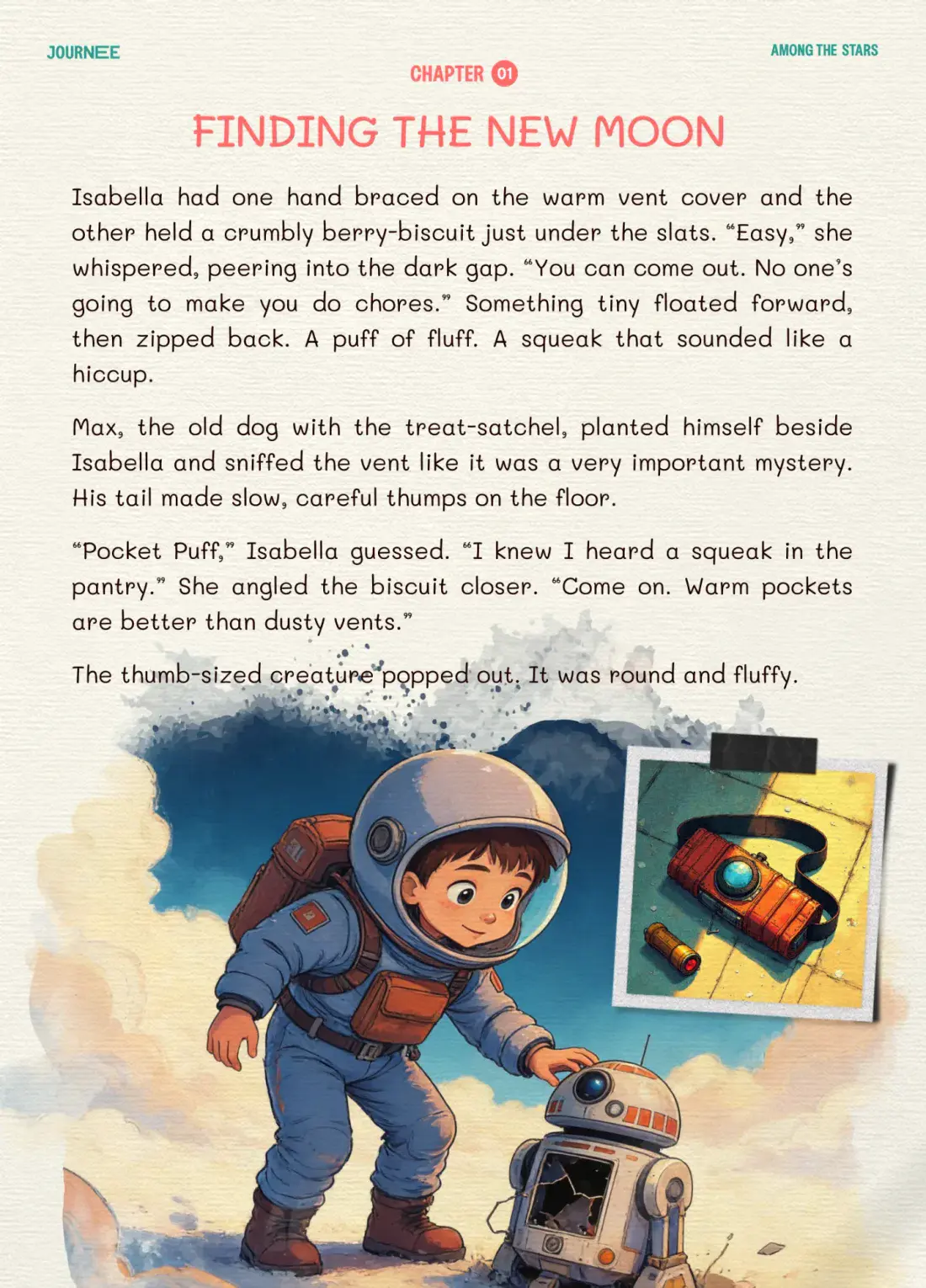

Typical AI slop
Human-crafted stories
What a generator makes
- One prompt in, one story out
- A cast nobody has met before
- Their face pasted on a generic, everyday story
- Nobody read it before it was sent
Made in a minute, forgotten by bedtime.
What the post brings
- Worlds built by writers and illustrators
- Characters who come back, letter after letter
- A story that waits for their decision
- Written around your child, every chapter
A world someone built. A story that waits for them.
The process
How a letter is made
Where the people are, and where the AI is. We would rather you knew.
-
1
Build the world
Writers and illustrators draw the places, name the ships, invent the cook who burns the soup. Years of work, six worlds so far, before any child arrives.
-
2
Tell us about them
Their name, their age, what they’re into. Grandma, the little brother, the dog. The things only a parent knows.
-
3
Fits the chapter to them
We use AI for a single job: setting the world’s next chapter around your child, carrying what they chose last time. The world, the people and the plot were written before it was asked.
-
4
Read it, print it, post it
A person reads most letters before they leave. Then paper, a real stamp, a real postmark, and the walk to the door.


That is the whole trick. One step out of four is a machine, and it is the step that makes the letter theirs. The other three are why it is worth reading.
AI for good: a new tool for an old purpose.
Without it, there would be no letter like this one: written for one child, at a price a family can pay.

-
01
Every letter is written for one child.
Their name on the envelope. Their family and their friends in the story. The words at the stage they read at, and the choice they made at the end of the last letter carried into this one. The pictures too: the hero being drawn is them.
-
02
We use new technology to get children reading.
On paper, with a story that waits for them on the mat. That is what the technology is for here, and nothing else. AI for good, in the plainest sense of the words.
-
03
Written by hand, every chapter would cost 10 to 20 times what it does.
Writers could do it, and for one child it would be a lovely thing. But for every child, every week, each chapter from a blank page, almost nobody could afford one.
-
04
The child never meets the AI.
No screen, no chat, no app. What they meet is an envelope with their name on it, a stamp, a postmark, and six to eight pages that know who they are.
-
05
And the people stay in it.
The worlds, the arcs of the stories and the drawings are ours, made before any child is asked their name. Most letters are read by one of us before they go to print.

The story engine