
Written by The Journee team Posted 17 September 2026 · 4 min read
On our bookshelf: The Iron Man by Ted Hughes
On our bookshelf this month: The Iron Man by Ted Hughes, a story told in five nights since 1968, and the best chapter-a-night read-aloud we know for a family.
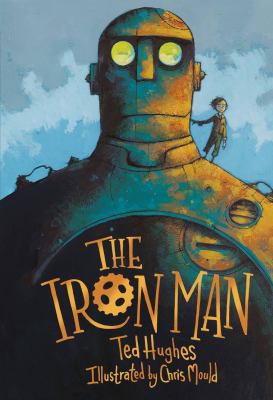
Our newsletter ends, every month or so, with a book. Never one of ours: one from the shelf in the hall, the kind that gets passed between the families on our team with a note tucked inside the cover. Those recommendations deserve a home on the blog too, so this is the first of them.
We are starting with the book that taught us, more than any other, what a story told in instalments can do.
The book
The Iron Man by Ted Hughes was first published by Faber and Faber on 26 February 1968, with illustrations by George Adamson. Its full title tells you its shape: The Iron Man: A Children’s Story in Five Nights (Wikipedia). Five chapters, one for each night, and it reads exactly as the subtitle promises: a story to be told at bedtime, by a poet.
Faber still keeps it in print in several editions, an illustrated one among them (Faber), and a sequel, The Iron Woman, followed in 1993.
You may know the story already from the film The Iron Giant, which took its title from the American edition. The book is stranger and shorter than the film, and, we think, better.
What happens, without spoiling it
A giant made of iron arrives at the top of a cliff. Nobody knows where from. He falls, breaks into pieces, and in the dark the pieces find each other again. Then he starts eating the farmers’ machinery, which the farmers do not care for at all. A boy called Hogarth is the first to see him, and the first to wonder what to do with him, rather than simply how to stop him.
That takes the first two nights. The other three go somewhere you will not expect, out past the edge of the farm and some way past the edge of the planet. They end with a contest settled not by strength but by endurance, and with a quiet idea about what the world might sound like if it stopped fighting.
The sentences are short and plain, written by a poet who knew exactly what each one weighed. Not a word is wasted, and nothing in it talks down to a child.
Why it works a chapter a night
Most chapter books can be read in instalments. This one was built for it, and you can feel it.
Each night ends where a night should. Every chapter closes on a question. The pieces are moving towards each other in the dark: what will they make? The Iron Man has been buried: is that the end of him? A child told “that’s tonight’s” will protest, and then lie awake working out the answer, which is exactly what a bedtime story is for.
Five is a good number. A week of school nights with the weekend off, or a working week with a night to spare. Long enough to feel like an undertaking, short enough that nobody loses the thread.
The chapters are short. Ten or fifteen minutes read aloud at an unhurried pace, and no night where the chapter is suddenly twice the length of the one before.
It grows as it goes. The first night is a cliff and a beach. The last is the whole sky. The story widens just as a child’s capacity for it grows over the week, which is a very fine piece of construction.
Read the first chapter slowly. Hughes writes the Iron Man’s fall and reassembly almost as a list, piece by piece, and the temptation is to speed up. Resist it. Let each piece find its place. It is the moment the book teaches your child how to listen to it.
And at the end of a night, close the book. Even if they beg. Especially if they beg. The begging is the story working.
Who it suits
Faber publishes it as a children’s book, and we will leave the age guidance to them. From our own kitchen tables: a child who can sit through a chapter will be gripped, and the ones a little frightened of the Iron Man on the first night are on his side by the fifth. The frightening parts are frightening the way a good story should be, with a boy at the centre of it who is braver than the grown-ups.
Older children and adults keep finding something new in it, too. The ending has been read as a fable about war and about what we are afraid of, and a ten-year-old will often see that before you do.
The shape we borrowed
We say this about most books that end up on this shelf, but it is truest of this one: The Iron Man is why we believe a story told in parts beats a story told all at once. The gap between the nights is where a child does their own imagining. It is the shape we chose for Journee, where a story arrives one letter at a time, each chapter ending on a choice your child makes and the next letter following where they sent it. If you are curious how that works, it is at /how-it-works.
But first: five nights, one giant, and one boy who thinks before he acts. If you have not read it since you were small, you are in for a treat. If you have never read it at all, we envy you a little.
More from the Post Room
- Reading 31 October 2026 · 4 min read
Books for 10 year olds: ten worth staying up for
Books for 10 year olds who are ready for bigger stories: ten real favourites, adventure, mystery and heart, and why each one suits a growing reader at ten.
Read
- Reading 31 October 2026 · 4 min read
Books for 6 year olds: ten they will want again
Books for 6 year olds that are a pleasure to share: ten real favourites, from first chapter books to read-alouds, and why each one suits a new reader at six.
Read
- Reading 31 October 2026 · 4 min read
Books for 8 year olds: ten to keep them reading
Books for 8 year olds who are reading on their own: ten real favourites, funny, spooky and brave, and why each one suits a confident young reader at eight.
Read


